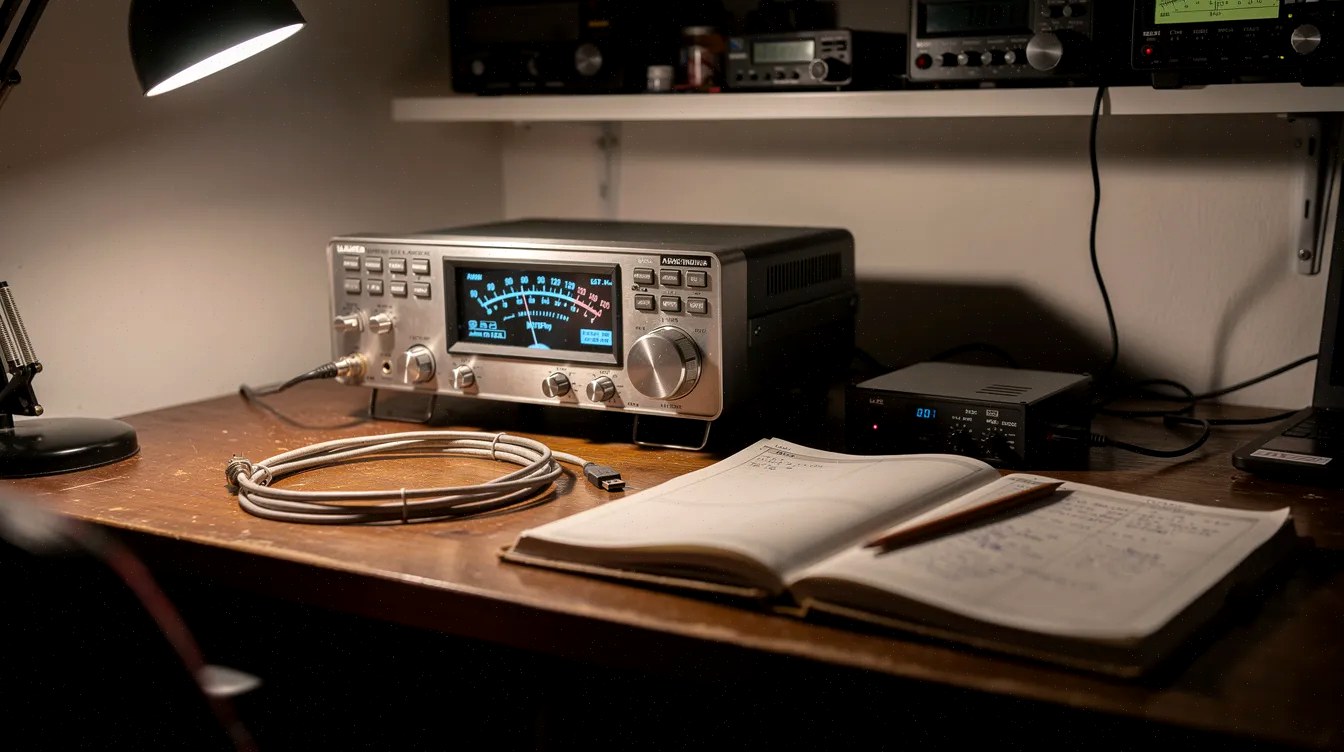
Cat2Web (C2W) is a Windows application that synchronizes a ham transceiver with public browser-based SDRs, and it has become a focal point for a larger argument inside amateur radio about what the hobby is supposed to be.
Val (LZ2XA), also known as Valentin Naydenov, developed the tool. It links a physical rig to WebSDR, KiwiSDR, and OpenWebRX/OpenWebRX+ receivers, as well as native SpyServer (Airspy) receivers. The synchronization is two-way: when you change the frequency or mode on the transceiver, the remote SDR follows.
- Two-way frequency and mode sync between rig and remote SDR
- FlexRadio 6xxx / 8xxx control via SmartSDR TCP API, including filter bandwidth
- Native SpyServer (Airspy R2 / Mini / HF+) support with local IQ demodulation
- OmniRig CAT control for Icom, Yaesu, Kenwood, and Elecraft rigs
- Beta TCI network control for SunSDR / Expert Electronics
Similarly, clicking on the SDR waterfall retunes the rig to match. That bidirectional control lets an operator listen to their own transmission from a distant receiver, spot on their own frequency, and keep one consistent operational view across platforms.
Some purists argue that extensive use of the internet diminishes the traditional skills and challenges associated with the hobby, sparking a debate about what constitutes "real ham radio".
, Amateur radio community debate
Built on CATSync, extended for network radios
Cat2Web builds on the concept pioneered by CATSync in 2018, but it adds functionality that the earlier approach did not cover.
The most significant addition is direct network control for FlexRadio 6xxx and 8xxx series transceivers through the SmartSDR TCP API. That path supports automatic radio discovery and synchronizes not only frequency and mode but filter bandwidth as well.
Cat2Web also supports the native SpyServer (Airspy R2, Mini, HF+) protocol directly. Instead of relying on a browser, it pulls the IQ stream, demodulates it, and plays the audio itself. The result is lower latency and more stable synchronization, which is a real technical advantage for users of those specific Airspy platforms.
For other transceivers, Cat2Web uses OmniRig for CAT control, covering a wide range of modern Icom, Yaesu, Kenwood, and Elecraft rigs. A new beta feature adds TCI network control for SunSDR and Expert Electronics radios, which removes the need for physical CAT cables or COM ports.
Why operators use it

The operational case is straightforward for anyone dealing with a challenging reception environment.
An operator in a noisy urban location dealing with QRM can use a remote WebSDR sited in a quieter area for reception while still transmitting locally. That effectively sidesteps local interference. The same setup is useful for chasing DX and for monitoring nets on clear remote receivers.
Monitoring your own signal from a distant location also gives direct feedback on antenna performance and signal quality, which is hard to obtain any other way at the transmit site.
The argument the tool has triggered
The community is divided over the reliance on internet infrastructure.
Some purists argue that heavy use of the internet erodes the traditional skills and challenges that define the hobby, which raises the question of what counts as "real ham radio." The disagreement is not really about Cat2Web's feature list. It is about whether a contact that depends on a remote receiver reached over the public internet still carries the same meaning as one made entirely with local equipment.
There is a practical dimension to that concern as well. Cat2Web's functionality depends on internet availability and stability. That sits awkwardly against amateur radio's traditional role in independent communication, particularly during emergencies when conventional systems may fail.
A tool that improves everyday operating can also, by design, stop working at exactly the moment the hobby's emergency rationale matters most.
Second-order effects worth watching
Beyond the philosophical question, there are downstream consequences that the community has started to weigh.
The first is equipment and skill investment. If remote reception is easy and cheap, some operators may have less incentive to invest in high-end local receiving equipment or to develop advanced listening skills. The capability that makes operating easier could, over time, reduce the pressure to get good at the hard parts.
The second is licensing and business model. Cat2Web is commercial, available for a €20 lifetime license after a demo period. That contrasts with the open-source ethos that prevails in parts of the amateur radio ecosystem, and it colors how some operators evaluate the tool independently of its technical merits.
The third is regulation. As internet-linked radio operations become more common, regulatory bodies like the FCC may increase scrutiny of bandwidth usage and data transmission protocols. That possibility lands in the middle of ongoing discussions about modernizing amateur radio rules, which means tools in this category could end up shaping the rules rather than simply complying with them.
What remains open
Cat2Web is a capable bridge between traditional transceivers and the expanding world of online SDRs. Its technical advantages are concrete: two-way sync, direct FlexRadio network control including filter bandwidth, native SpyServer support with lower latency, broad CAT coverage through OmniRig, and a TCI beta path for SunSDR and Expert Electronics hardware.
What is not settled is the long-term effect. The impact on operating practices, on community dynamics, and on the regulatory landscape of amateur radio remains a subject of ongoing discussion and future observation. For operators evaluating the tool, the technical case and the philosophical case are separate questions, and the community has not finished answering either one.