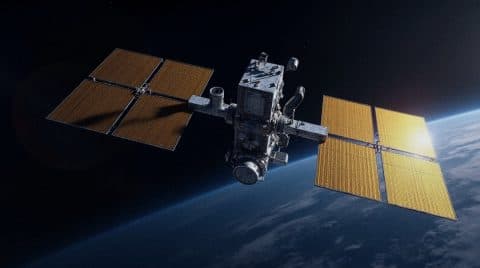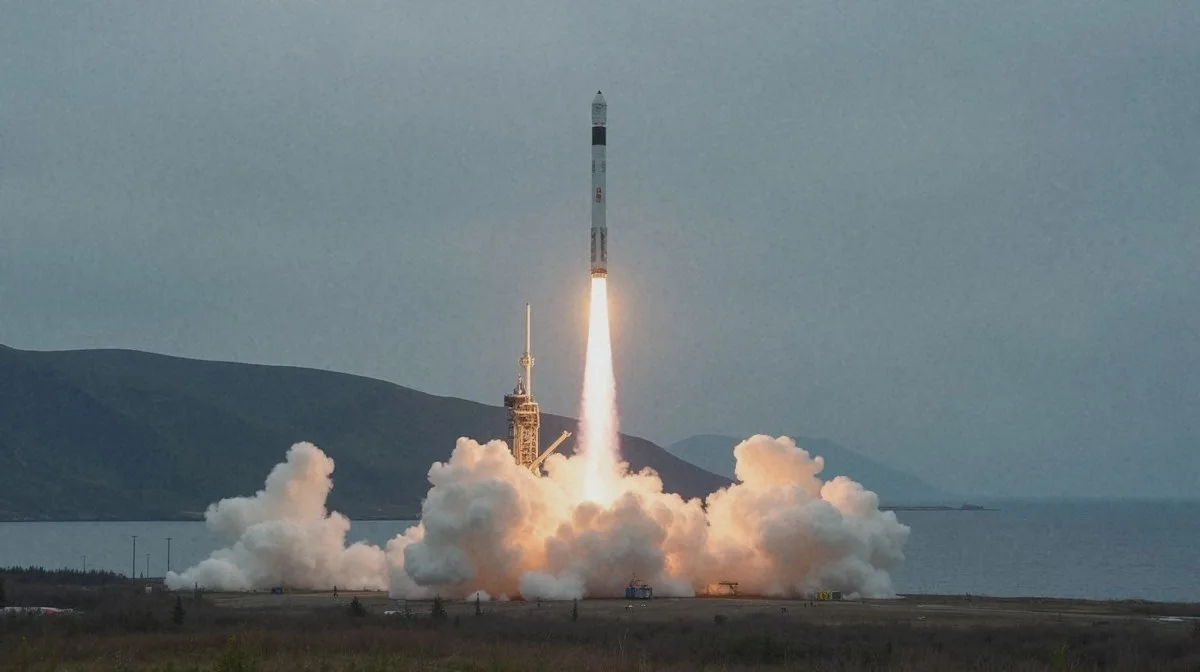
On September 5, 2026, German rocket startup Isar Aerospace launched its Spectrum rocket from Norway's Andøya spaceport and delivered payloads into low Earth orbit. The mission, named "Onward and Upward," marked the first time a commercial space company from Europe successfully placed satellites in orbit on its second flight. It was also the first rocket to reach orbit from Western Europe.
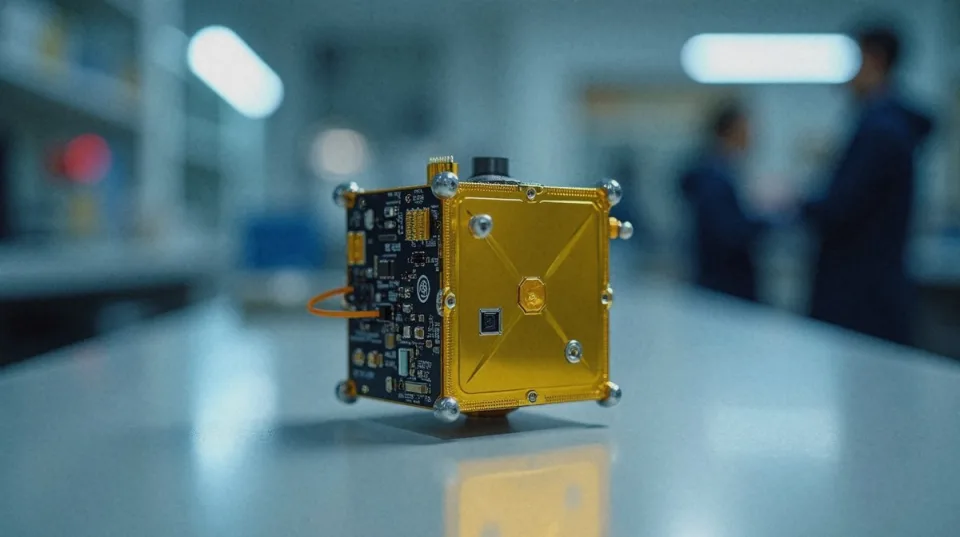
For amateur satellite operators, the commercially interesting part is the manifest. The launch deployed five or six commercial and educational CubeSats plus a technology-demonstration payload. Two of the deployed payloads are amateur radio band satellites coordinated by the International Amateur Radio Union (IARU).
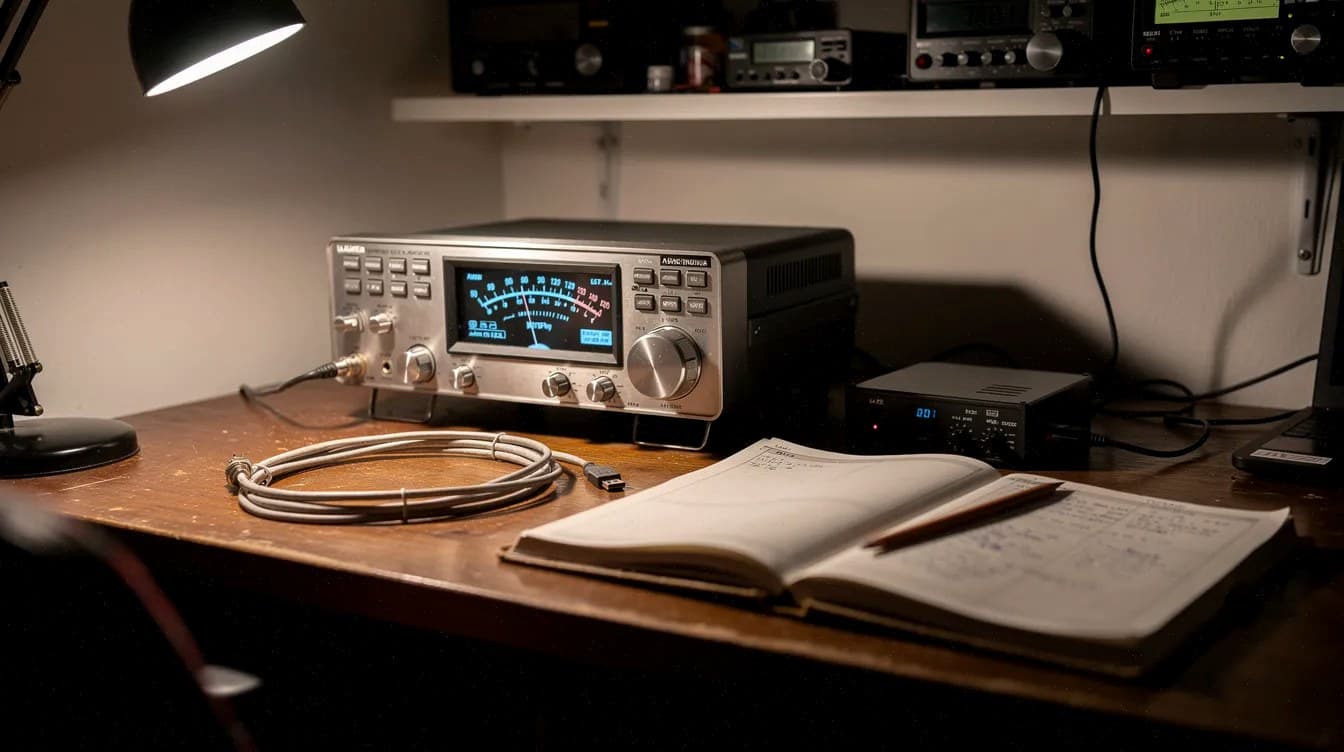
Operators can begin with very modest and basic gear, and 5 watts is enough for contacts.
, John Stringer, M5JFS, in his OARC talk "Chasing Birds: The Addictive World of Amateur Radio Satellites"
That coordination matters: IARU frequency coordination is the mechanism that keeps amateur payloads inside the band plans and gives operators a predictable set of uplink and downlink allocations to work with once the satellites are commissioned.
- TLE formats for satellites launched after July 2026: JSON, XML, and KVN
- Traditional TLE bulletins continue indefinitely for older satellites
- Reason for the change: longer object numbers in a growing catalog
Why European launch capacity changes the amateur calculus
This success has implications beyond just one flight. Isar Aerospace's success signals a growing European capability to provide independent launch services, addressing bottlenecks in the global space industry that have historically constrained when and how small payloads reach orbit.
Rideshare slots have long been the limiting factor for university CubeSat teams and amateur satellite groups, and additional European launch capacity expands the pool of available slots.
The company is scaling quickly. Spectrum launch vehicles 3 through 7 are already in production, and a new facility is nearing completion with a target of manufacturing up to 40 launch vehicles per year. That production rate, if realized, would represent a structural shift in the region's space sector toward greater commercial autonomy and capacity.
For satellite builders, more vehicles in production means more frequent launch opportunities and shorter waits between design freeze and on-orbit operation.
AMSAT pushes satellite education into the community
 TangoXray
The amateur satellite community is not waiting for the next launch to build its pipeline of operators. The AMSAT News Service (ANS) weekly bulletin ANS-256, published on September 13, 2026, reports that the AMSAT Youth Initiative has expanded its offerings with a new "Satellite and Astronomy" course. The course is part of a broader goal to provide fourteen free, interactive online courses by the end of 2026.
The delivery model is intentional. The initiative takes a "community-based" approach, supplying learning resources for youth, parents, and youth group leaders without requiring school system buy-in. That removes the institutional gatekeeping that often slows STEM curriculum adoption and broadens the reach of space science education to groups that would otherwise have no access to it.
A five-award sweep in a single submission
Individual achievement in the amateur satellite world got a notable entry this month. Frank Hoonhaut, KJ7DZ, completed a full sweep of the AMSAT Award Ladder, earning five awards in a single submission:
- Satellite Communicators' Club Award
- Oscar Satellite Communication Achievement Award #660
- Oscar Satellite Sexagesimal Award #205
- Oscar Satellite Century Award #64
- South Africa AMSAT Satellite Communication Achievement Award #US262
Hoonhaut is only the 64th operator to achieve the Century Award, a figure that says something about the difficulty curve. Working enough satellites, across enough orbits and pass geometries, to clear the full ladder in one submission requires sustained operating discipline rather than a single lucky pass.
"5 watts is enough"
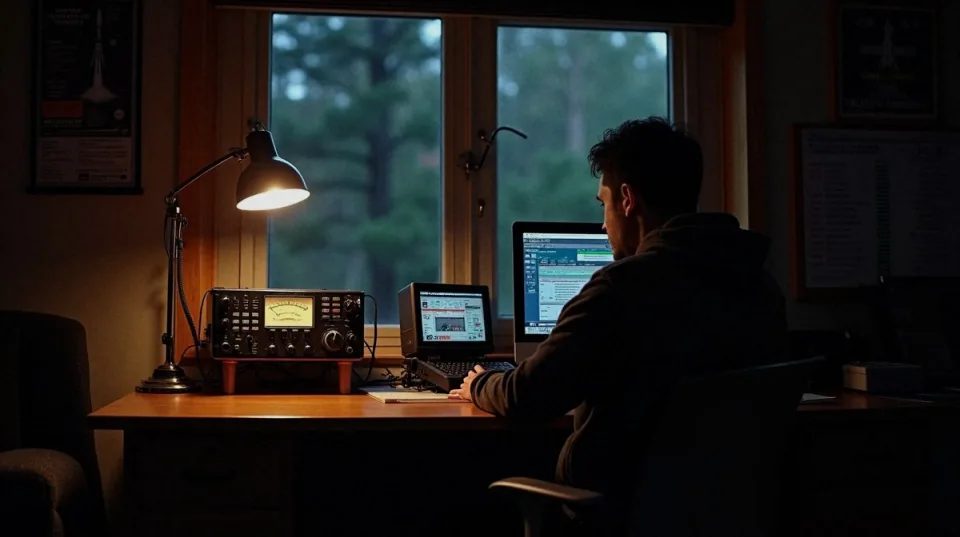
For newcomers wondering whether satellite work demands a serious station investment, John Stringer, M5JFS, addressed the question directly in a talk titled "Chasing Birds: The Addictive World of Amateur Radio Satellites," delivered for the Online Amateur Radio Community (OARC). Stringer emphasized that operators can begin with "very modest and basic gear" and that "5 watts is enough" for contacts.
 TangoXray
That is a useful calibration point for anyone building a first satellite station. The constraint in low Earth orbit work is usually pass timing and antenna gain toward the horizon, not raw transmit power.
TLE distribution moves to JSON, XML, and KVN
AMSAT is also adapting its technical infrastructure to a more crowded orbital environment. The organization is transitioning its Two-Line Element (TLE) distribution to new formats, JSON, XML, and KVN, for satellites launched after July 2026. The driver is object number length: as the catalog grows, the traditional fixed-width TLE field can no longer accommodate longer object numbers.
Traditional TLE bulletins will continue indefinitely for older satellites, so operators tracking legacy birds are not cut off. The dual-track approach keeps existing tracking software working while giving developers of newer tools structured formats to parse.
One item left thin
The ANS-256 bulletin also mentioned a "World Radio Broadcast & 'Send Your Name into Space' Campaign." Specific details on that initiative were not extensively covered in the available material, so operators interested in it should watch AMSAT channels directly for the operational particulars.
What to watch next
Two threads are worth tracking. First, the amateur radio band payloads from the September 5 launch will need commissioning and frequency coordination confirmation before they are usable, and IARU coordination status is the place to check. Second, the Spectrum production ramp, with vehicles 3 through 7 in build and a facility targeting up to 40 vehicles per year, determines how often European amateur and educational payloads get a ride.
Both threads point the same direction: more launch capacity in Europe, more satellites in the catalog, and more reason for operators to keep their tracking software and station skills current.