After this lesson you will be able to explain, in plain words, what electric current is, what voltage is, and how electromotive force differs from voltage, without reaching for algebra.
What Actually Moves: Current
 TangoXray
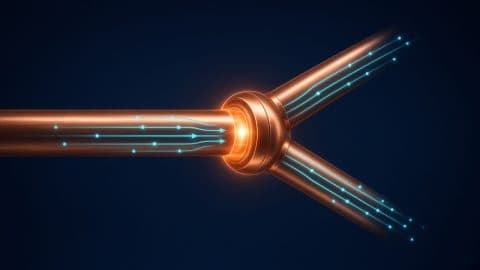
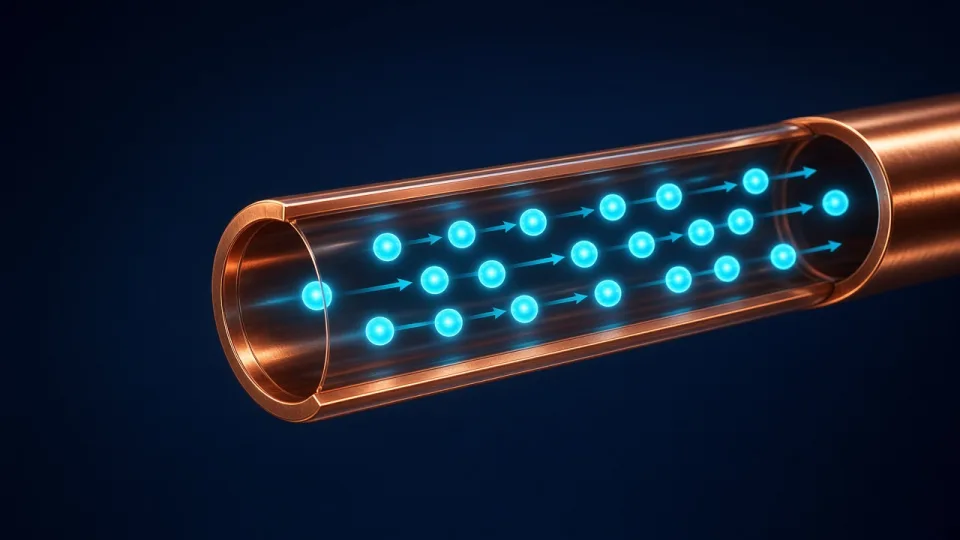
Electric current is the flow of electric charge. In a copper wire the charge carriers are electrons, and current is simply how much charge passes a given point each second. The unit is the ampere, usually shortened to amp or A.
Two numbers are worth holding on to. One ampere is roughly 6 x 10^18 electrons passing a point every second. Yet any single electron drifts along slowly, sometimes only a few centimeters per minute. The signal and the energy travel fast because the whole crowd of electrons shifts almost together, the way a push on one end of a filled pipe appears at the other end at once.
What Pushes: Voltage
Current does not start by itself. Something has to push. That push is voltage, also called electric potential difference. It is the difference in electrical potential energy between two points in a circuit, measured in volts (V).
If a source gives one coulomb of charge twelve joules of energy, the potential difference is 12 volts. Voltage is always measured between two points. A single point does not have a voltage; it has a potential, and the difference is what drives charge.
Where the Push Comes From: Electromotive Force
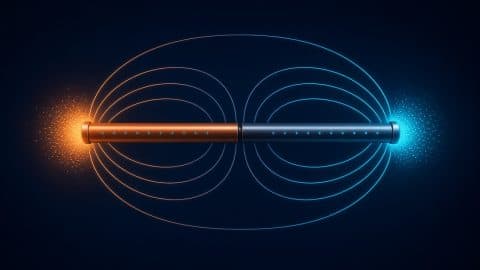
Electromotive force, or EMF, is the push supplied by the source itself: a battery, a generator, a solar cell, a thermocouple. EMF is the energy per unit charge the source can deliver to move charge around a circuit. It is also measured in volts.
The name is misleading. EMF is not a force in the newton sense. It is energy per unit charge, and the historical name simply stuck.
EMF Versus Voltage: Cause and Effect
Here is the distinction that trips people up. EMF is the cause. Voltage, or potential difference, is the effect, and it can appear anywhere in the circuit.
Open circuit, no current flowing: the EMF appears almost entirely across the source terminals. Connect a load and current flows. Now the voltage measured at the terminals is slightly lower than the EMF, because some of the source's own energy is spent inside it. That internal loss is called internal resistance, and the drop is EMF minus the current times that internal resistance.
The same idea explains why long, thin power cables matter in a station. Current through cable resistance consumes voltage before the current ever reaches the radio. That is voltage drop, and it grows with current, so it bites hardest during transmit.
A Quick Note on the Water Analogy
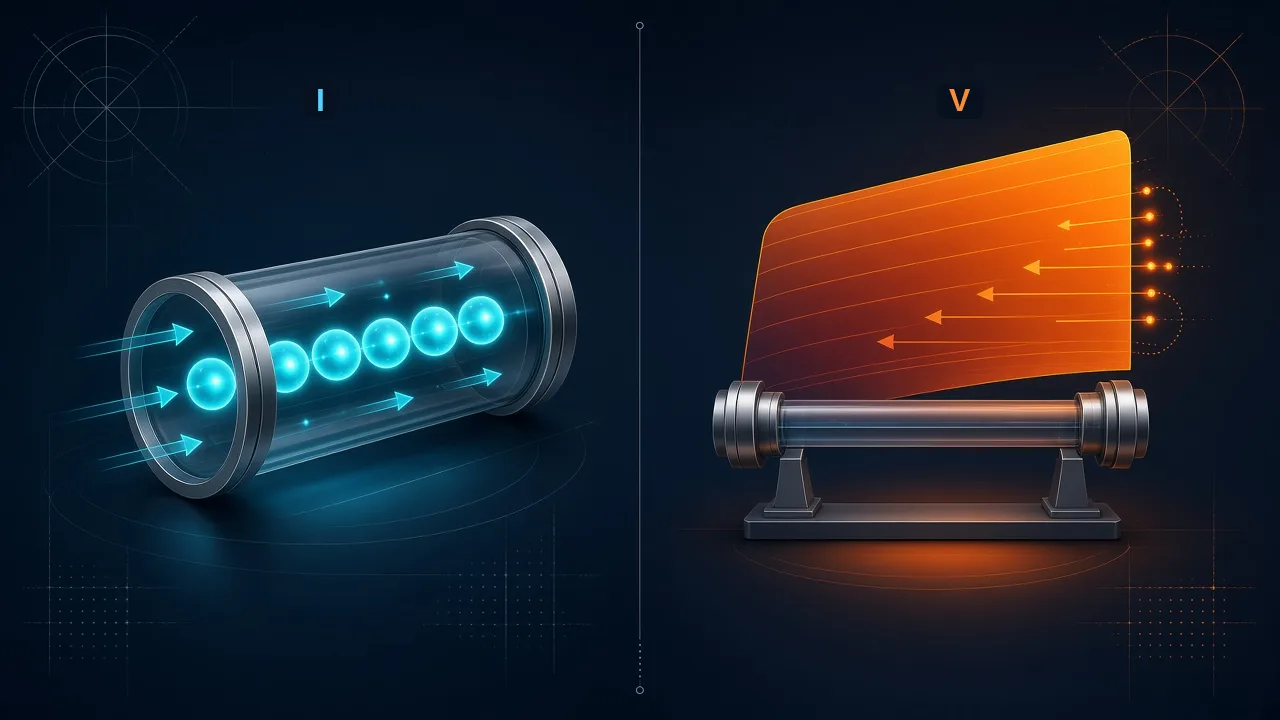
The water analogy is useful and limited. Pressure is voltage, flow rate is current, a narrow pipe is resistance, and the pump is EMF. Where it breaks: electrons drift slowly while the signal moves near the speed of light, water molecules do not repel each other the way electrons do, and energy in a real circuit travels in the fields around the conductors, not inside the copper.
Use the analogy to build intuition, then set it down.
Check Yourself
- If no current flows through a battery, what is the potential difference across its terminals?
- Two points in a circuit differ by 9 volts. How much energy does one coulomb of charge give up moving between them?
- Why can the voltage at a radio be lower than the voltage at its power supply?
Common mistake: saying "the current is 12 volts." Current and voltage are different quantities with different units. Voltage is the push, current is the flow, and mixing their units hides real circuit behavior.
Next idea in the syllabus: resistance, and how it links voltage to current through Ohm's law.