Radio
More articles
Kirchhoff's Rules as Bookkeeping
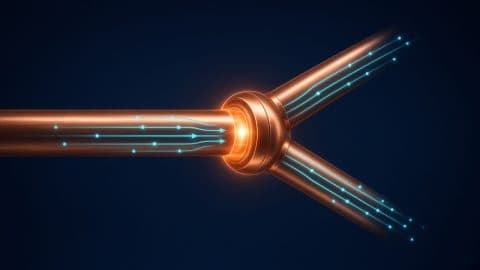
Gustav Kirchhoff introduced two rules in 1845 to analyze DC circuits: Kirchhoff's Current Law (KCL) ensures charge conservation at nodes, and Kirchhoff's Voltage Law (KVL) ensures energy conservation in loops.
September 17, 2026
Moonbounce: The Moon as a Radio Reflector
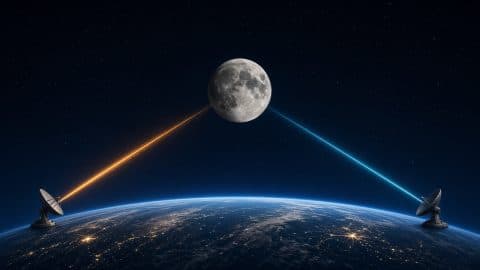
Earth-Moon-Earth (EME) communication, or moonbounce, uses the Moon as a passive reflector to transmit signals between Earth stations. First demonstrated in 1946 by the U.S.
September 17, 2026
Ohm's Law Without the Intimidation
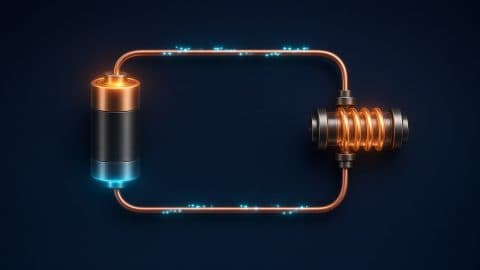
Resistance opposes electric current flow in a circuit, influenced by material, length, thickness, and temperature. Ohm's law (V = I × R) explains the relationship between voltage, current, and resistance, essential for designing and understanding electrical systems.
September 17, 2026
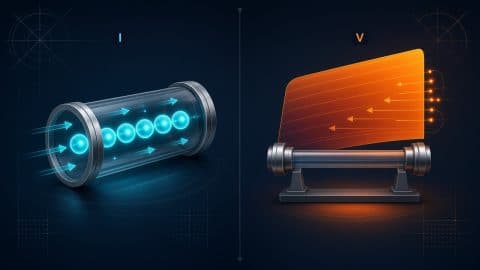
What Moves and What Pushes
Electric current is the flow of charge (like electrons in a wire), measured in amps, while voltage is the push driving it, measured in volts.
September 17, 2026
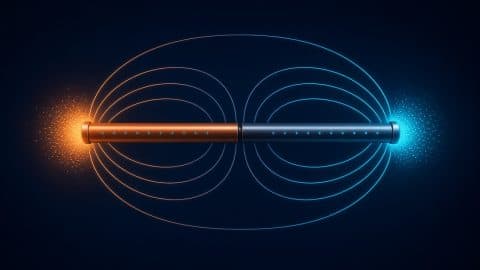
Charge, Electrons, and Antennas: The Atomic Physics Behind Radio
Every radio wave you transmit starts with charge moving in a conductor. Key the microphone, and electrons in the antenna slosh back and forth. That motion is what launches the wave. You do not need the SI size of one electron to use a radio.
September 17, 2026
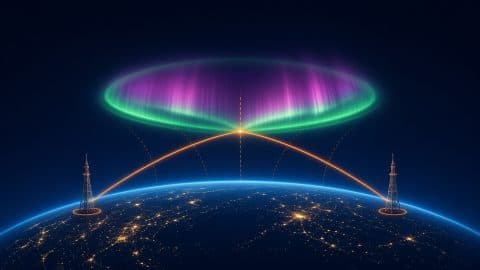
Auroral Backscatter Basics
Solar flares eject charged particles toward Earth, funneled by its magnetic field into the polar E layer (100-120 km up), creating ionization that scatters VHF signals, enabling auroral backscatter communication.
September 17, 2026
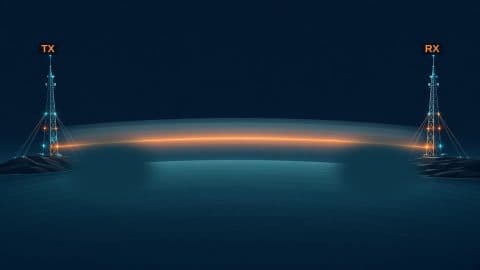
Tropospheric Scatter and Ducting
Temperature inversions in the troposphere (7-20 km above ground) can bend VHF and UHF radio signals, trapping them in ducts that extend transmission ranges beyond the horizon.
September 17, 2026